
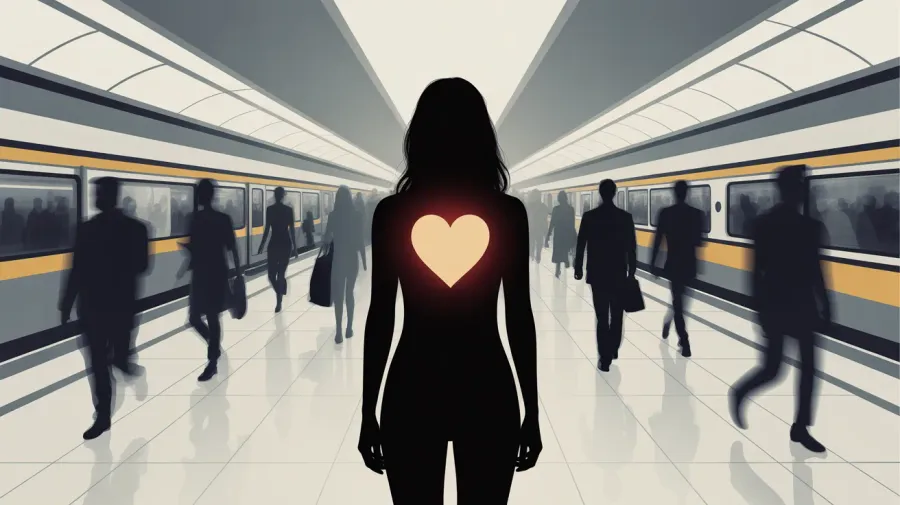
You walk along the clean, orderly avenues of a European, Canadian, or Australian city. Punctual public transport glides by, there is no fear of street crime at every corner, and grocery stores feature immaculate aisles. Everything you carefully planned back home is right before your eyes. Yet, as you pass dozens of reserved pedestrians with closed expressions avoiding eye contact, a sudden, sharp tightness grips your throat. You feel utterly invisible—a ghost walking through a pristine movie set that does not belong to you.
In clinical psychotherapy counseling relocated women across the globe, this is one of the most intimate and heartbreaking admissions I receive: "Eliza, people here are perfectly polite, but nobody truly embraces you. If I collapsed on the sidewalk, they would summon an ambulance with high efficiency, but no one stops to ask how my soul is doing. I have a desperate, aching hunger for genuine human warmth."
Loneliness abroad and expatriate social grief are not the ungrateful complaints of someone who "fails to appreciate foreign privileges." They represent a legitimate psychological wound inflicted by the sudden amputation of emotional resonance, social recognition, and the communal ties that anchored your identity.
📖 Foundational Reading: Explore our cornerstone analysis on expat adaptation: Migration Grief and Loneliness in Expat Women: Rebuilding Roots Abroad.
Collective Warmth vs. Individualistic Protocol: The Relational Shock
For women raised in warm, relational cultures, effortless sociability is the unseen emotional oxygen of daily existence. Back home, a spontaneous chat with a neighborhood shopkeeper, an unannounced visit with a friend on Tuesday afternoon, or loud laughter across a family table quietly regulate the nervous system.
| Dimension of Connection | Collective & High-Context Cultures | Individualistic Northern Cultures |
|---|---|---|
| Expression of Warmth | Physical hugs, kisses on the cheek, spontaneous smiles on the street, tactile affection. | Strict physical boundaries, formal handshakes, polite but measured and distant smiles. |
| Spontaneous Connection | "Drop by for coffee anytime," spontaneous evening dinners, easy weekend plans. | Rigid calendaring: catching up over coffee must be scheduled weeks or months in advance. |
| Sharing Vulnerability | Rapid emotional intimacy, authentic venting, community solidarity during personal hardship. | Personal distress reserved for strictly private domains; public conversation limited to weather and work. |
| Linguistic Strain | Effortless fluency, nuanced humor, local idioms, and shared cultural shorthand. | Continuous cognitive filtering in a secondary language; chronic feeling of sounding simplified or shallow. |
| Care in Distress | "Come here, sit down, tell me everything" (communal holding). | "You should consult a certified professional" (institutionalized care). |
When this matrix of organic warmth dissolves overnight, relocated women experience an acute "relational withdrawal" that destabilizes mood and erodes internal security.
The Neurobiology of Chronic Loneliness: The Body Under Threat
Landmark research by the late neuroscientist Dr. John Cacioppo (University of Chicago) revealed that chronic loneliness is not merely a melancholy mood; it is registered by the brain as an imminent threat to physical survival.
🧠 The Relocated Brain Under Sustained Social Isolation:
- Activation of Physical Pain Circuits: Functional neuroimaging (fMRI) reveals that social isolation activates the dorsal anterior cingulate cortex (dACC)—the identical brain region that processes physical burns and fractures.
- Social Hypervigilance Mode: Lacking the protection of a trusted "tribe," the amygdala shifts into hyper-alertness, misinterpreting neutral workplace comments from foreign colleagues as intentional hostility.
- Pro-Inflammatory Cytokine Cascade: Sustained isolation elevates baseline interleukin-6 (IL-6) and tumor necrosis factor (TNF-alpha), suppressing immune function and generating diffuse musculoskeletal aches.
- Degradation of Restorative Sleep: Visceral feelings of vulnerability trigger micro-awakenings throughout the night, preventing deep slow-wave repair and causing persistent morning exhaustion.
Consequently, many women living abroad report frequent colds, thyroid irregularities, digestive distress, and overwhelming fatigue. The physical body is somatizing the grief of uprooting.
The Triad of Social Amputation in Relocation
In clinical expat psychology, we delineate three structural losses that constitute expatriate social grief:
graph TD
    A["1. Linguistic Fatigue: The exhausting labor of translating one's soul"] --> B["2. Loss of Social Status & Historical Mirror"]
    B --> C["3. Skin Hunger & Physical Affection Deprivation"]
    C -->|Chronic feelings of invisibility and existential emptiness| A
1. Linguistic Fatigue: Translating One's Soul
Even when a woman achieves high linguistic fluency, functioning in a foreign language requires non-stop prefrontal executive supervision. Jokes lose their comic timing, emotional nuances sound clumsy, and spontaneous passion is sanitized through analytical filters. You grow profoundly weary of constantly having to explain who you are.
2. Loss of the Social Mirror
Back home, people understood your background: they knew where you studied, your career achievements, and your family history. Abroad, you are often stripped of context—reduced to a visa number, an exotic accent, or a generic expat. This loss of community witnessing destabilizes self-esteem.
3. Skin Hunger and Tactile Deprivation
The acute absence of warm hugs, spontaneous touches on the shoulder, and physical affection produces a documented physiological deficiency known as Skin Hunger, strongly correlated with sudden spikes in anxiety and depressive symptoms.
This unaddressed social grief frequently strains marriages, accelerating a Marital Crisis in Immigration or compounding Expat Mothers' Burnout.
The Social Media Trap and Secret Shame
A severe amplifier of loneliness abroad is the tyranny of curated social media perfection. Relocated women often feel silenced from expressing grief to family back home, fearing accusations of ingratitude: "You live in a first-world country and you're crying? How ungrateful!".
To maintain appearances, they post pictures of historic architecture, train journeys, and picturesque cafes while weeping in isolation behind bathroom doors. This widening gap between a glittering public facade and private emotional misery breeds profound imposter feelings.
Clinical Psychotherapy Protocol for Belonging and Root-Building
Cross-cultural integrative psychotherapy offers clinical methodology to transform paralyzing loneliness into fertile solitude and resilient connection:
- Radical Validation and De-Stigmatizing Grief: Lifting the internal ban on sorrow. Mourning the loss of cultural warmth without labeling yourself weak or unsuited for international life.
- Integrating the Archetype of the Foreigner (Carl Jung): Viewing expatriation as a crucible of individuation. Forfeiting the demand that the foreign city mimic home and discovering the expanded identity emerging from the journey.
- Strategic Construction of Cultural Bridges: Structured steps to cultivate authentic local connections—joining intentional expat circles, cultural organizations, and local networks sharing common core values.
- Sensory Anchoring in Cultural Heritage: Re-engaging cultural anchors (native music, literature, cuisine) not as an escapist retreat, but as vital emotional nutrients that stabilize the psyche.
Whether you are supported by our Brazilian Psychologist in Porto, working with our Brazilian Psychologist in Madrid, or seeking therapy across Europe and North America, telepsychology rebuilds your internal sanctuary.
Living far from your homeland may have separated you from familiar streets, but it can never erase the depth of your story. You do not have to live as a ghost; it is entirely possible to take root and flourish wherever you plant your feet.
Related Clinical Readings:
- Migratory Grief in Brazilian Women Expats: Rooting Your Soul
- Migration Grief and Loneliness in Expat Women
- Marital Crisis in Immigration: Relocation Stress on Couples
- Female Burnout and the Invisible Mental Load
References and Clinical Frameworks
- Cacioppo, John T. & Patrick, William: Loneliness: Human Nature and the Need for Social Connection (W. W. Norton & Company, 2008).
- Achotegui, Joseba: The Ulysses Syndrome: Extreme Migratory Stress and Mental Health (Culture, Medicine and Psychiatry, 2010).
- Jung, Carl Gustav: The Development of Personality: Collected Works, Vol. 17 (Princeton University Press, 1981).
- World Health Organization (WHO): Social Determinants of Mental Health in Mobile Populations (2024).
🛡️ Clinical Standards: Review our Editorial Policy and Telepsychology Standards.